.png)
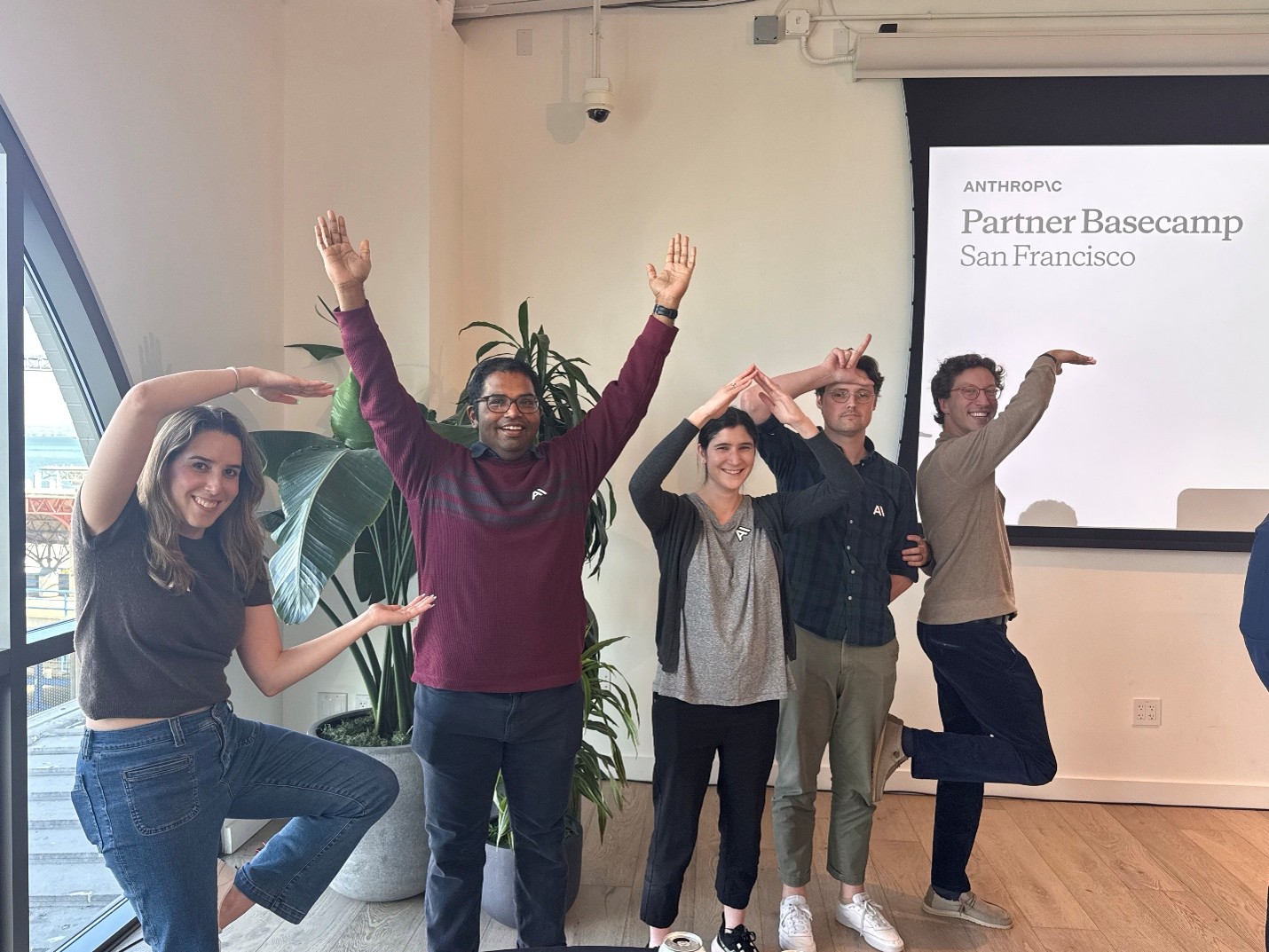
What happens when you send four eager consultants and their global head of engineering to an Anthropic Basecamp? They come back with a new way to watch their boss's favorite game: Pokémon.
The Anthropic Partner Basecamp
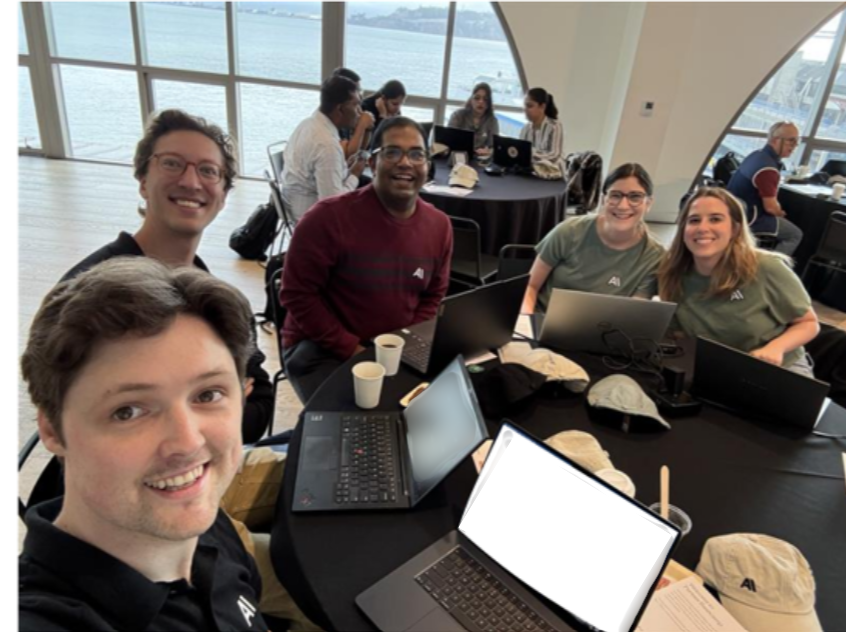
In August 2026, as a Select Anthropic Consulting Partner, the Aimpoint team joined Anthropic's Partner Basecamp in San Francisco - a chance to learn directly from the team building some of the most capable frontier models available today, and to sharpen how we bring that capability to our clients. A few ideas from the event stuck with us.
1. Evals come before the agent. This is something our AI Engineering practice already practices in its work: define success before you build, not after. A good eval scorecard is rarely just "ask another LLM what it thinks". It blends AI judges with deterministic metrics like accuracy, latency, tool-call success, cost, and completeness. Figuring out how you will know the agent is working before you design the agent is fundamental to long term success in production.
2. You don't need your biggest model for every step. There are real cost and performance wins available without over engineering the architecture. Routing each step to a model that matches its complexity, caching repetitive context instead of reprocessing it, batching what doesn't need to be real-time – these are just some of the many options available to design an appropriate solution that doesn’t blow token costs out of the water.
3. Planning beats "vibe coding." Working in Claude Code drove home the value of spec-driven development. We all know AI can speed up coding. However, defining the problem, reviewing the approach, refining it before any code gets written–the upfront time investment from a human is where the real value comes from. Underneath it all is the agentic loop: an agent doesn't just answer a prompt, it reasons, calls tools, checks results, updates its understanding, and keeps going until it accomplishes the task. The quality of the final outcomes depends on far more than the model - tool design, context, orchestration, and failure handling all carry real weight.
Putting It Into Practice: Building an AI Pokémon Commentator
We got 90 minutes at a hackathon to build something with AI. Most teams built something inspired by their day job. We built something inspired by our boss.
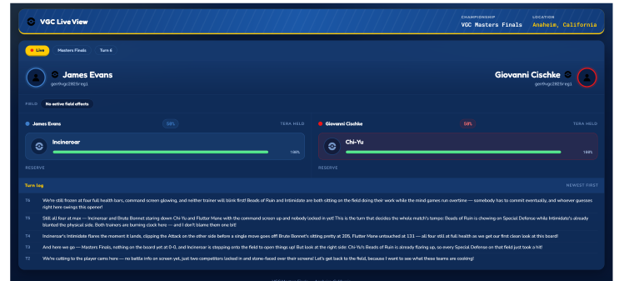
Our global head of engineering loves Pokémon, and her calendar that week was wall-to-wall meetings - no time to watch the VGC World Championships happening in San Francisco that same week. So we built her a play-by-play commentator she could half-watch while "working."
It started as a commentary generator for finished Pokémon Showdown replays. The fun part was pushing further: could it watch an actual live broadcast and generate commentary? There's no game API for an official stream, so we built a pipeline that captures video with ffmpeg, grabs a few frames every few seconds, and hands them to Claude's vision model, which reads HP bars, move text, and Tera icons off the screen the same way a human would. Those reads become plain-English turn observations, which a second Claude call playing an energetic shoutcaster, turns into live commentary, grounded strictly in what it actually saw. No invented damage numbers, no guessed outcomes.
The fun constraint: a video feed is fuzzier than a replay's structured battle log, so the model is told to omit anything it can't clearly read rather than guess. That same discipline runs through the stats panel, which tracks live win probability from real HP totals and actual damage-calc math instead of a black box.
The kicker: even with continuous live vision calls, the whole thing runs for under $3/hour. Built, tested, and demoed in 90 minutes.
Takeaway
The biggest lesson from Basecamp wasn't that AI can write code fast - we knew that already. It's that building fast and building right are different skills.
Enterprise AI needs real architecture, measurable evals, the right model for the right step, efficient inference, reliable tools, and humans who understand how it all fits together. That's the muscle we bring to clients: start with the business problem and what success looks like, think about evaluation from day one, and figure out where AI actually adds value versus where a deterministic system is just... better.
Sometimes that produces an enterprise agent. Sometimes, given 90 minutes and a Pokémon-loving boss, it produces a live shoutcaster.
Both take the same thing: real engineering, not vibes.