.png)
Introduction
Beyond static and descriptive reporting, Sigma stands out as a powerful solution for operations-based dashboards, enabling financial services organizations to move towards a governed, interactive operating model that connects data directly to decision-making.
Throughout this article we will explore the limitations of traditional finance reporting before moving into the new proposed live operating model that leverages Sigma’s core capabilities and expands further with Sigma AI apps.
The core challenges
Seeing organizations continue to rely on static reporting, disconnected spreadsheets, and dashboards that summarize results without enabling interaction with the underlying business drivers is painful, especially when we evaluate the current BI solutions, just to find they often fall short.
.png)
With AI acceleration, the need for accuracy, speed, control and automation just got more valuable, and Sigma is here to support all of these. Traditional approaches begin to break down when business leaders need to explore scenarios dynamically, investigate emerging trends, or make decisions in real time. This paradigm shift is becoming the new black.
From dashboards to live operating models
Sigma capabilities are well aligned with the principles of a live operating model, enabling users to seamlessly navigate from high-level KPIs to transactional detail without needing to leave a governed analytics environment.
Within Sigma, we can go beyond delivering insights by empowering the business to automate processes, streamline workflows, and accelerate analysis. Sigma combines analytics, automation, and workflow orchestration in a single experience.
Sigma is well-suited for this operating model because it allows business users to explore governed warehouse data directly, while still giving data teams control over model definitions, security, and reusable logic. It enables finance teams with the ability to create an interactive financial experience.
Sigma AI Apps: Finance workflows built on live data with agentic workflow capabilities
Further supporting our live operating model, we introduce Sigma AI Apps, a concept that combines live data, user inputs, layouts, and actions into purpose-built applications. When passive BI becomes a limitation for companies, Sigma’s table-based inputs and write-back capabilities become especially valuable.
Enabling finance teams to capture structured inputs such as forecast adjustments, variance explanations, approval statuses, risk notes, and compliance signoffs directly in the live operating model.
Those inputs are written back to the data warehouse, where they become part of the governed reporting ecosystem instead of living in disconnected spreadsheets. These workflows are built where the analysis already happens, shifting from previously needing to export data to another tool just to collect comments, approvals, or adjustments, into an enhanced operational finance management experience.
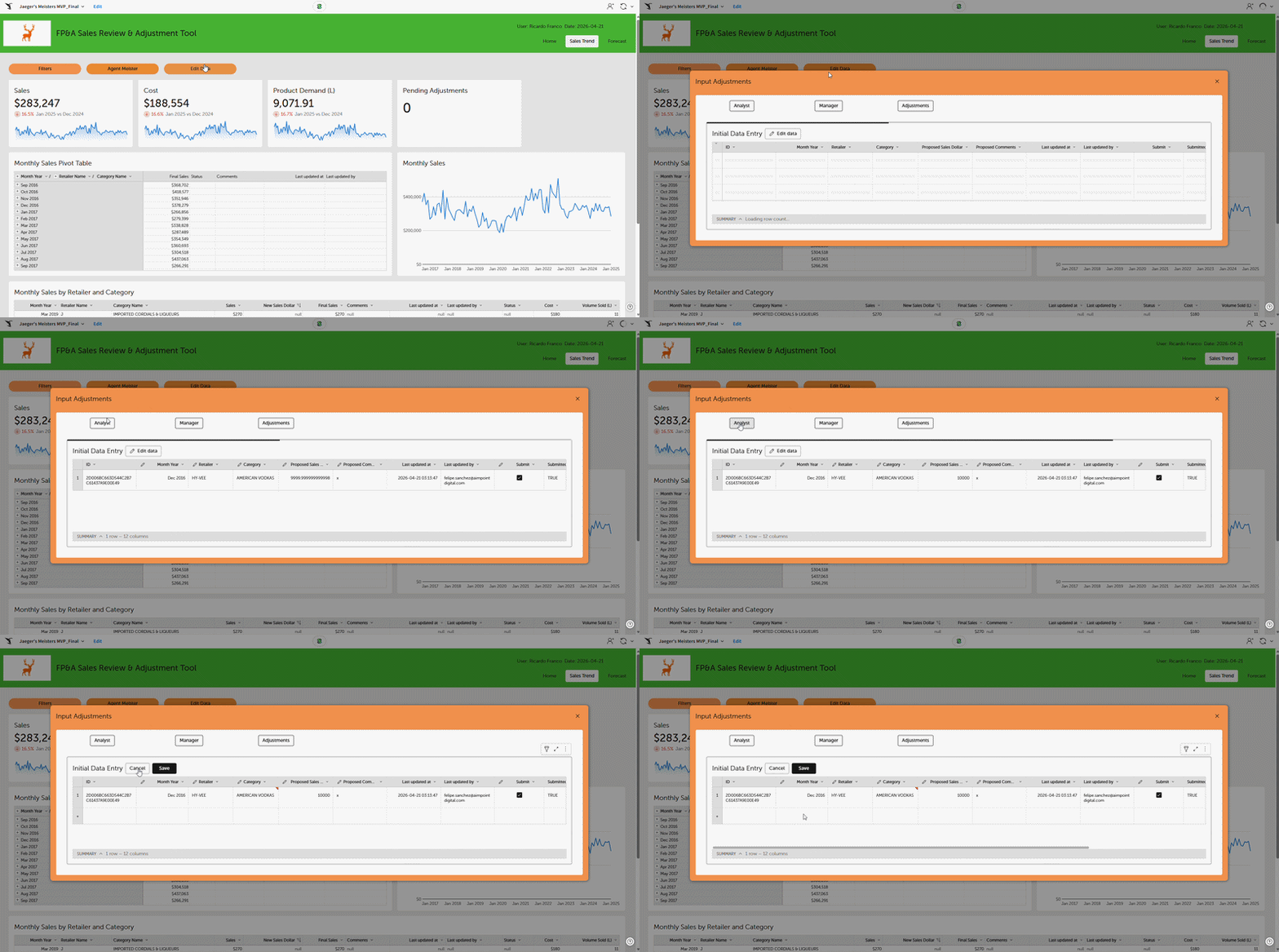
To exemplify this, we build an FP&A Sigma app, where finance teams can manage planning and approval workflows end-to-end all while submitting, reviewing, and approving forecast changes, without leaving the analytics environment. This creates a seamless, auditable process that combines analysis, collaboration, and decision-making.
How does AI fit into all of this? Sigma implements intelligent automation, pairing it with AI-driven agentic workflows that end up empowering finance teams, which most of the time need to monitor trend changes, be alerted when something crosses a threshold or when a metric requires review.
Sigma helps organizations move from traditional “show me the variance” type of questions, to “monitor the business and tell me what needs attention”.
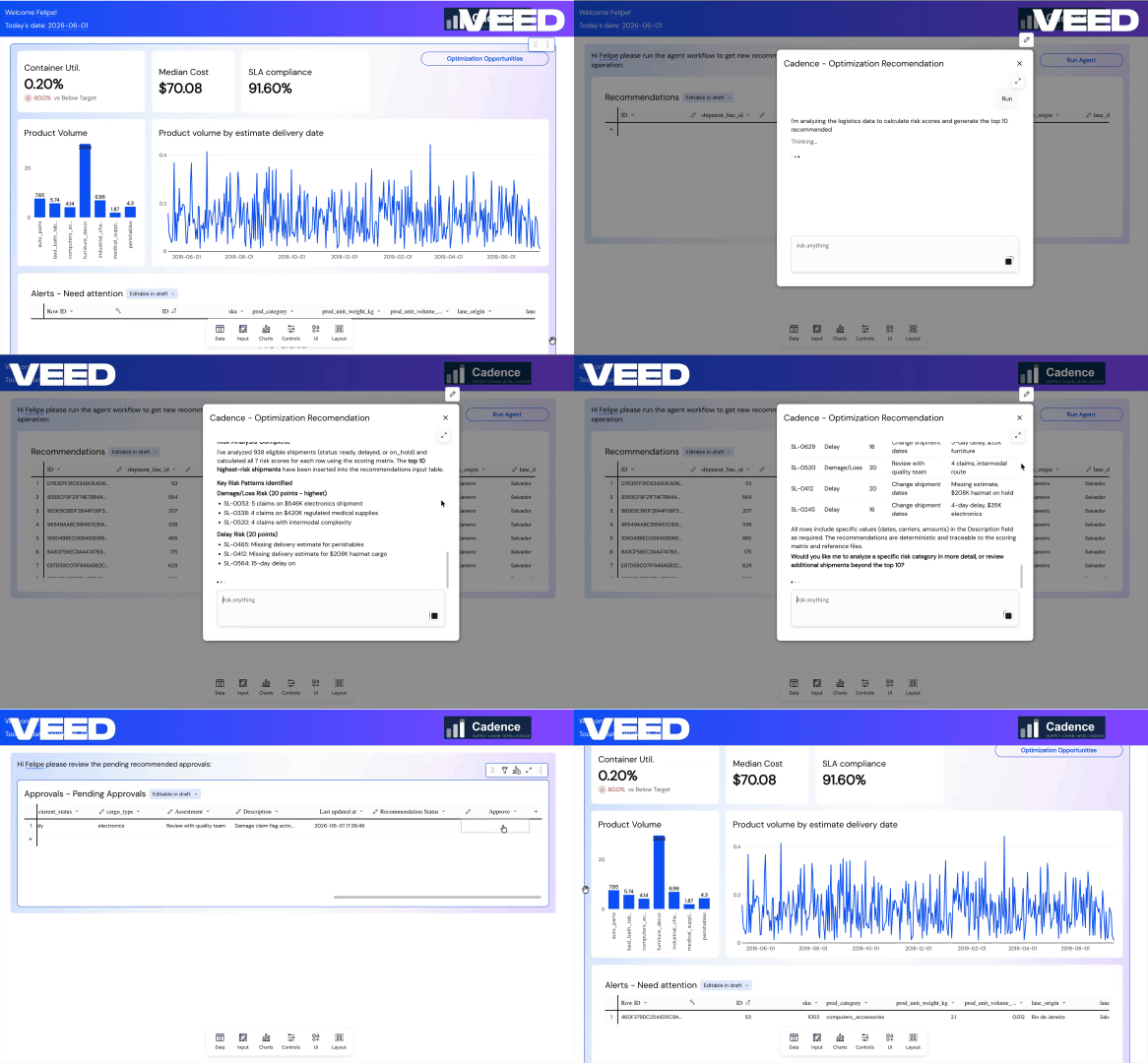
To demonstrate the approach, we trained a Sigma agent using an optimization model, a grading framework, and a set of business-defined risk categories. At a high level, the agent analyzed shipment data, identified potential risks, scored and prioritized them, and surfaced the top 10 shipments requiring immediate attention.
These recommendations were then routed to a Sigma table, where a warehouse manager could review, approve, or modify the proposed actions before escalating them to an operations manager for final approval. Once approved, the actions were written to a governed action-items table and distributed to the relevant stakeholders across the business.
Conclusion
As the Financial Services industry keeps evolving at a fast pace and expectations to excel in a competitive market continue to rise; Sigma establishes itself as the perfect partner by combining governed data models, self-service analysis, writeback capabilities, Sigma Apps, and AI-powered workflows that are presented within a single business-facing experience, enabling your company to analyze, collaborate, and act through interactive analytics.
Built on a modern data platform, it allows finance and operational teams to move seamlessly from insight to action—exploring data, documenting decisions, managing approvals, and executing workflows without leaving the analytics environment.